dohom@sanly.tm
75 D.Azady Street, Turkmenbashi
The role of fertilizer chemistry in the intelligent specialization of the country's agricultural development.

1. Bulk chemical industry.More than 70 elements are found in plants, most of which are found in very small amounts. However, elements such as carbon, oxygen, hydrogen, nitrogen, phosphorus, sulfur, magnesium, potassium, and calcium are also abundant and essential for life. Plants can obtain nitrogen, phosphorus, and potassium (NPK) from the air and soil. However, these three elements (NPK) are supplied externally to the plants for good yield. Fertilizers are used to enrich the soil with NPK.Organic fertilizers. In them, nutrients are stored in substances of animal and plant origin. First of all, these fertilizers include manure, as well as various products of the processing of substances of animal and plant origin (peat, fish meal, feces, urban waste and various food wastes).Bacterial fertilizers - retain microorganisms that facilitate the accumulation of nutrients in the soil.2. Mineral fertilizers - products of inorganic origin, prepared by the industrial-factory method: chemical or mechanical processing of inorganic raw materials (for example, extraction of minerals - phosphorites, potassium salts, dolomites, etc., etc.). .). Mineral fertilizers obtained by chemical processing of raw materials differ in the concentration of active substances. Mineral fertilizers are divided into the following groups according to their active ingredients: nitrogen, phosphorus, potassium and micronutrients (boron, molybdenum, etc.).Along with the increasing demand for fertilizers, the production of NPK and NPK compounds has also increased. Many mineral fertilizers (for example: KCl, NaNO3, NH4NO3, etc.) contain only one nutrient. Such fertilizers are considered simple. Mineral fertilizers with two or three primary nutrients (NPK) in their composition are more complex. They belong to complex fertilizers.Air (raw material for nitrogen), phosphate rock (raw material for phosphorus) and sylvinite (raw material for potassium) are used as the main raw materials for fertilizer production.Elements   Duty NitrogenIt is stored in proteins. Deficiency causes slow growth..PhosphorusIt is stored in the composition of nucleic acids. It is necessary for the growth of roots. It helps in energy exchange during exposure.PotassiumAccelerates photosynthesis. Increases hydrocarbon production..The main functions of N, P and K elements as fertilizers Fertilizers are divided into simple and complex fertilizers according to the nutrients stored in the system. Simple fertilizers include nitrogen, phosphorus and potassium fertilizers. Simple nitrogen fertilizers include ammonium nitrate NH4NO3, urea (NH2)2CO and others. Simple superphosphate Ca(H2PO4)2•2CaSO4, double superphosphate Ca(H2PO4)2 and others are simple phosphorus fertilizers. Simple potassium fertilizers include potassium sulfate K2SO4 and others.

Other articles

All articles
Card image cap
Oct 23 2026
Turkmenistan’s logistics system

Turkmenistan lies at the heart of Eurasia, between the Caspian Sea and its borders with Iran, Afghanistan, Kazakhstan and Uzbekistan. This position makes the country a natural link in transit routes between East and West and between North and South. In recent years it has been building a multimodal logistics system that unites road, rail, sea and air transport. The centerpiece of this system is the Turkmenbashi International Seaport. It has operated since May 2018 and has focused on stimulating international cooperation in transport and logistics. The new port more than tripled the country’s cargo handling capacity to 25–26 million tons per year. It is the largest cargo and passenger hub on Turkmenistan’s coast. In March 2026, a European Union delegation visited the port, where both sides discussed making effective use of the Trans-Caspian corridor’s potential. The port is a key part of the Caspian Sea–Black Sea corridor. Officials are discussing ways to increase freight traffic through the ports of Turkmenbashi, Baku, Poti, Batumi and Constanta. The Lapis Lazuli Corridor also forms a route from Afghanistan through Turkmenistan, Azerbaijan and Georgia to Turkey. On the railways, the Kazakhstan–Turkmenistan–Iran line, opened in 2014, connects Central Asia with the Persian Gulf. On the roads, highways link the country with Kazakhstan, Iran and Afghanistan, and new high-speed roads are being built toward Uzbekistan and Kazakhstan. In aviation, Ashgabat’s international airport and the new airports in the regions meet international standards. Speaking at the Central Asia + Japan Dialogue Summit, President Serdar Berdimuhamedov presented a strategy to turn the country into a key Eurasian logistics hub. He stressed that new routes should complement existing ones rather than replace them.

Card image cap
Oct 21 2026
The impact of ecosystem stability on human health

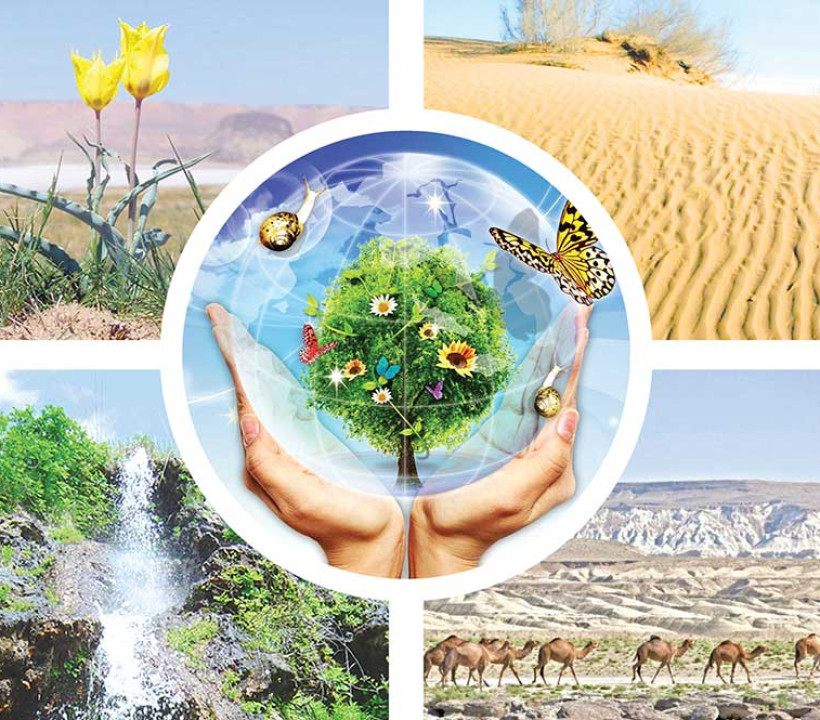
Ecosystem stability refers to nature's ability to maintain its own balance, biodiversity, and purity. Human health is directly dependent on the state of the environment. A stable ecosystem provides humans with essential baseline resources necessary for survival. The connection between humans and nature is profound, and ecosystem stability serves as a guarantee for both physical and mental human health. Clean Air and Water: Forests and plants purify the air by absorbing carbon dioxide and releasing oxygen. Natural water sources and healthy soils filter water, making it safe for drinking. Food Security and Soil Fertility: A stable soil ecosystem and rich biodiversity (such as insect pollinators for crops) ensure abundant and high-quality agricultural yields. Disease Prevention: Maintaining natural balance prevents the overproliferation of infection carriers (such as insects and rodents). The loss of biodiversity increases the risk of new viruses and diseases transferring to humans. Psychological and Mental Health: Natural environments, green spaces, and pristine ecosystems reduce stress levels, normalize blood pressure, and soothe the nervous system. Pharmaceutical Resources: More than 50% of modern medicines are derived from natural plants and biological resources. Richer biodiversity enhances the potential for discovering new lifesaving drugs. Prevention of Zoonotic Infections: Protecting natural habitats maintains crucial boundaries between wildlife and human populations, preventing the spillover of zoonotic viruses to humans. Climate Regulation: Forests and oceans regulate global temperatures. A stable climate protects communities from extreme heatwaves, droughts, and natural disasters. Safeguarding human health relies not only on healthcare systems but is fundamentally connected to protecting the ecosystem and maintaining its stability. A resilient environment is the foundation of a healthy, prosperous society. Preserving ecosystem purity is the most critical step toward securing the well-being of future generations.

Card image cap
Oct 19 2026
Digital Education — A Reliable Foundation for Development

In the Revival of the New Era of the Powerful State, under the leadership of the Esteemed President, the national education system is undergoing a fundamental modernization to align with international standards. In accordance with the "Concept for the Development of the Digital Education System in Turkmenistan," the integration of innovative technologies, artificial intelligence, and advanced digital tools into the educational process has become a priority of state policy. Equipping classrooms with modern multimedia facilities, interactive whiteboards, and high-speed internet significantly enriches the content of teaching. These reforms pave the way for providing the younger generation with a world-class education, assessing their capabilities, and discovering their talents from an early age. Today, artificial intelligence technologies make it possible to design personalized curricula tailored to the learning pace and fields of interest of each student. This modern, student-centered approach not only enhances the quality and accessibility of education but also automates teachers' daily administrative tasks, allowing them to focus entirely on creative pedagogical endeavors. Furthermore, the introduction of 3D modeling and CAD (Computer-Aided Design) software in vocational and secondary professional schools develops students' spatial thinking and engineering skills. Before working with real industrial equipment, youth learn to create designs and blueprints in a digital environment, which is highly essential for ensuring occupational safety in their future careers. Along with this, teaching the basics of web technologies and coding in educational institutions builds algorithmic and logical thinking in students. The younger generation is transforming from mere consumers of ready-made information into active drivers of the future digital economy, capable of independently developing digital products, websites, and software projects. Multimedia resources, interactive approaches, and gamified learning methods boost students' academic curiosity and create ideal conditions for an engaging learning experience. Evidently, the modern education system, harmoniously combining innovation and national upbringing, enhances youth curiosity and fosters the development of highly qualified professionals who will significantly contribute to the economic, scientific, and industrial progress of our Motherland. The state-led science and education policy, by turning technology into the most effective tool for learning, confidently secures the power and bright future of our country.