dohom@sanly.tm
75 D.Azady Street, Turkmenbashi
FRIENDLY RELATIONSHIPS

As a result of the unprecedented efforts of our national leader, many centuries of work on railway transport have been carried out, which has been improved and made great progress. By the blessing of the President, in the first month of 2021, "Turkmenistan is the Motherland of Peace and Confidence" with the participation of the heads of state of Turkmenistan and the Islamic Republic of Afghanistan. The launch of the fiber-optic communication system and transit flows, as well as the transmission lines from Kerki to Shibirgan, will also contribute to the strengthening of friendly and brotherly relations between the two countries.

It is also gratifying that under the wise guidance of our dear Arcadia, the national telecommunication system, which meets international standards and ensures high quality of information exchange, has achieved great success.

Turkmenistan-Afghanistan-Pakistan-India gas pipeline, Turkmenistan-Afghanistan-Pakistan high-voltage power transmission system, fiber-optic communication system, railways connecting Turkmenistan and Afghanistan play a key role in Turkmenistan's relations with the region.

Another important event demonstrating that Turkmenistan's foreign policy is based on good relations is the signing of a Memorandum of Understanding between the Government of Turkmenistan and the Government of the Republic of Azerbaijan on Joint Exploration, Development and Development of Seafood. Friendship »field. The heads of state of the two countries took part in the signing ceremony of this important document, which symbolizes the high level of friendship and good neighborliness.

As the President noted in his speeches, the modern transport, communications and logistics systems created in Turkmenistan are aimed at developing international cooperation and are an effective tool for building and strengthening good relations between peoples.

The commissioning of the Kazakhstan-Turkmenistan-Iran railway along the North-South route will also stimulate cooperation in the Middle East and Southeast Asia.

Turkmenistan has been the heart of the Great Silk Road for centuries. Today, the area is being restored at a modern level. Projects to strengthen international economic relations and the broad support of the world community for the political views of Turkmenistan, based on good relations in the international arena, further strengthen the international prestige of our independent neutral state.

Oguljahan GYLYJOVA

Balkan welaýatynyň Türkmenbaşy Şäherindäki Deňizçilik orta hünär okuw mekdebiniň mugallymy.
Other articles

All articles
Card image cap
Oct 26 2026
Turkmenistan’s Diversified Economy and Its Role in the Development of Social Protection for the Population

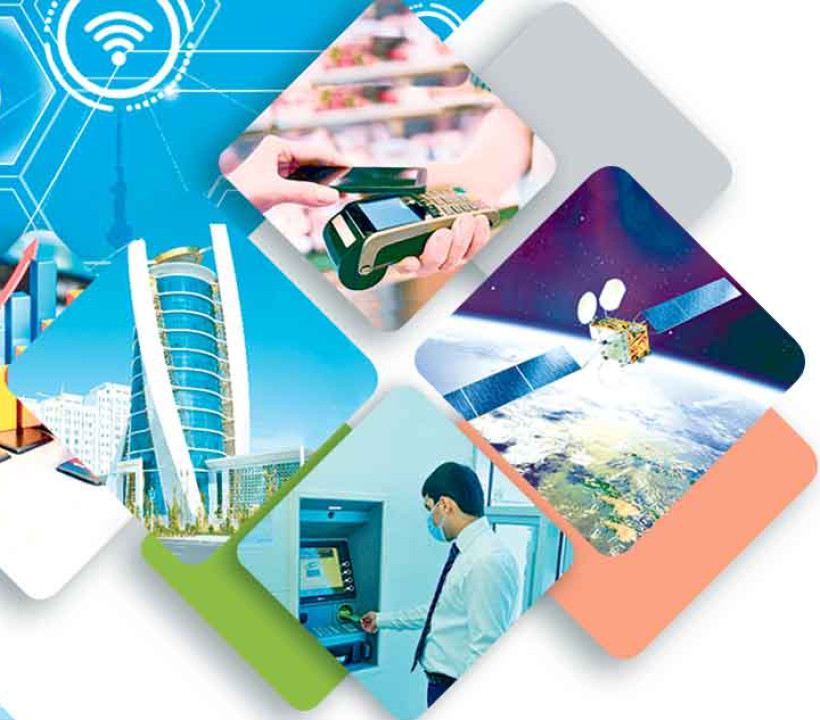
Over the 35 years of independence, Turkmenistan has strengthened its position among countries experiencing rapid economic growth and successfully integrating into the global economy. The main objective of the reforms implemented in the country is to overcome the economy’s dependence on raw materials, advance market-oriented reforms, use natural resources efficiently, and create favourable conditions for people’s lives, health, and safety. These objectives are clearly reflected in the fundamental principle of the country’s state policy: “The State is for the People!” Throughout this historical period, the consistent implementation of a strategic development policy focused on industrial growth and innovation has played a major role in ensuring the country’s economic independence. Support for infrastructure development, a strong commitment to achieving the Sustainable Development Goals, and the implementation of the objectives outlined in the National Programme for the Socio-Economic Development of Turkmenistan for 2011–2030 and the Programme for the Socio-Economic Development of Turkmenistan for 2019–2025 have provided important impetus for improving production efficiency, making rational use of investments, and supporting the non-state sector of the economy. Looking back at the progress achieved, it is particularly important to note that, during the years of independence, Turkmenistan has undergone a significant transformation, moving from a predominantly agricultural economy towards a country with a developed industrial sector. At the initial stage, agriculture accounted for more than 40 per cent of the country’s gross domestic product (GDP), while industry represented approximately 17 per cent. More than 80 per cent of industrial output at that time came from extractive industries. Today, industry accounts for more than 27 per cent of GDP, while agriculture represents approximately 11–12 per cent. At the same time, the structure of agricultural production has changed considerably. While cotton cultivation continues to play an important role, grain production has been restored and further developed, and a foundation has been established for the expansion of livestock farming. These changes have contributed to strengthening the country’s food security.

Card image cap
Oct 23 2026
Turkmenistan’s logistics system

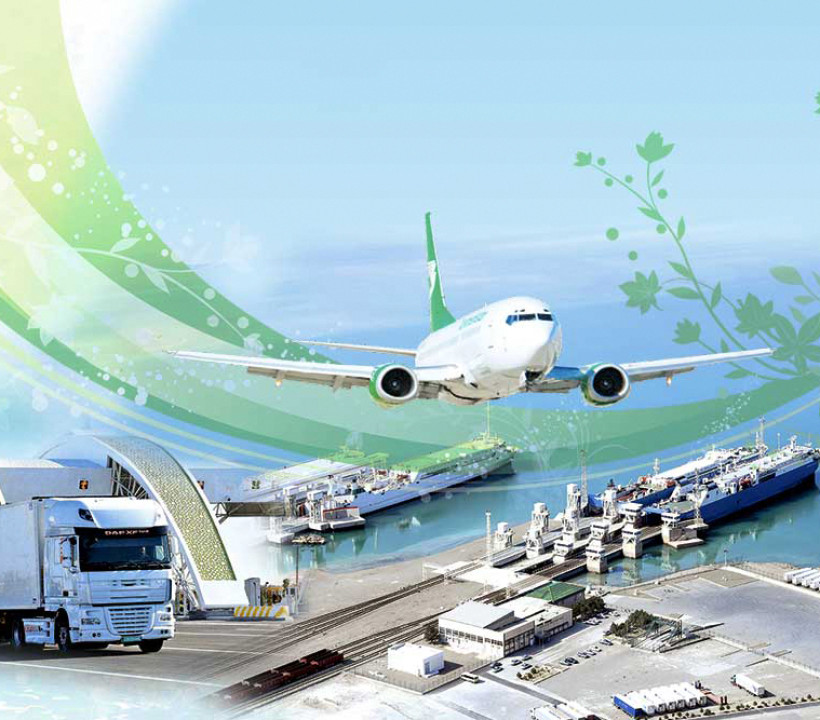
Turkmenistan lies at the heart of Eurasia, between the Caspian Sea and its borders with Iran, Afghanistan, Kazakhstan and Uzbekistan. This position makes the country a natural link in transit routes between East and West and between North and South. In recent years it has been building a multimodal logistics system that unites road, rail, sea and air transport. The centerpiece of this system is the Turkmenbashi International Seaport. It has operated since May 2018 and has focused on stimulating international cooperation in transport and logistics. The new port more than tripled the country’s cargo handling capacity to 25–26 million tons per year. It is the largest cargo and passenger hub on Turkmenistan’s coast. In March 2026, a European Union delegation visited the port, where both sides discussed making effective use of the Trans-Caspian corridor’s potential. The port is a key part of the Caspian Sea–Black Sea corridor. Officials are discussing ways to increase freight traffic through the ports of Turkmenbashi, Baku, Poti, Batumi and Constanta. The Lapis Lazuli Corridor also forms a route from Afghanistan through Turkmenistan, Azerbaijan and Georgia to Turkey. On the railways, the Kazakhstan–Turkmenistan–Iran line, opened in 2014, connects Central Asia with the Persian Gulf. On the roads, highways link the country with Kazakhstan, Iran and Afghanistan, and new high-speed roads are being built toward Uzbekistan and Kazakhstan. In aviation, Ashgabat’s international airport and the new airports in the regions meet international standards. Speaking at the Central Asia + Japan Dialogue Summit, President Serdar Berdimuhamedov presented a strategy to turn the country into a key Eurasian logistics hub. He stressed that new routes should complement existing ones rather than replace them.

Card image cap
Oct 21 2026
The impact of ecosystem stability on human health

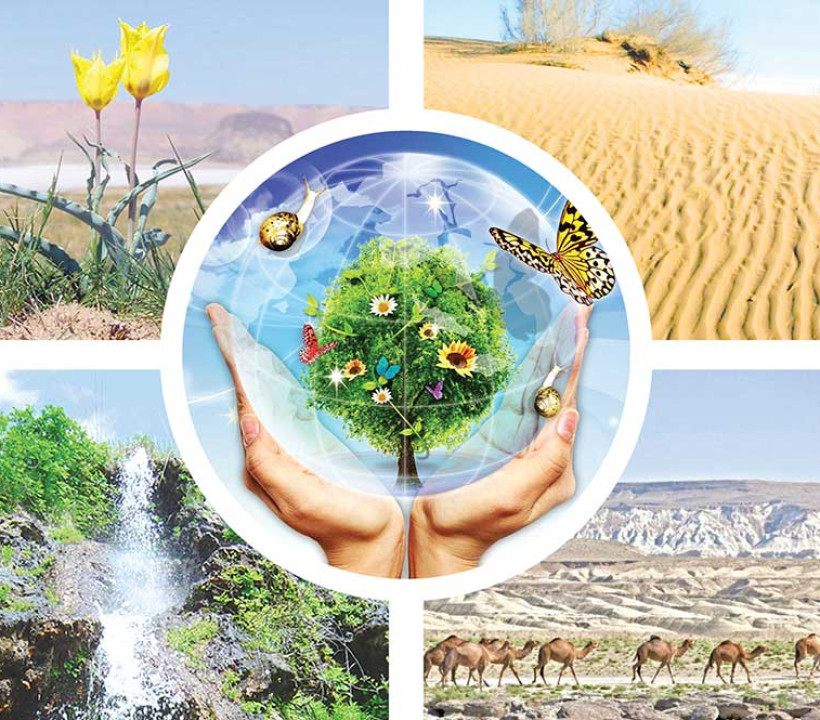
Ecosystem stability refers to nature's ability to maintain its own balance, biodiversity, and purity. Human health is directly dependent on the state of the environment. A stable ecosystem provides humans with essential baseline resources necessary for survival. The connection between humans and nature is profound, and ecosystem stability serves as a guarantee for both physical and mental human health. Clean Air and Water: Forests and plants purify the air by absorbing carbon dioxide and releasing oxygen. Natural water sources and healthy soils filter water, making it safe for drinking. Food Security and Soil Fertility: A stable soil ecosystem and rich biodiversity (such as insect pollinators for crops) ensure abundant and high-quality agricultural yields. Disease Prevention: Maintaining natural balance prevents the overproliferation of infection carriers (such as insects and rodents). The loss of biodiversity increases the risk of new viruses and diseases transferring to humans. Psychological and Mental Health: Natural environments, green spaces, and pristine ecosystems reduce stress levels, normalize blood pressure, and soothe the nervous system. Pharmaceutical Resources: More than 50% of modern medicines are derived from natural plants and biological resources. Richer biodiversity enhances the potential for discovering new lifesaving drugs. Prevention of Zoonotic Infections: Protecting natural habitats maintains crucial boundaries between wildlife and human populations, preventing the spillover of zoonotic viruses to humans. Climate Regulation: Forests and oceans regulate global temperatures. A stable climate protects communities from extreme heatwaves, droughts, and natural disasters. Safeguarding human health relies not only on healthcare systems but is fundamentally connected to protecting the ecosystem and maintaining its stability. A resilient environment is the foundation of a healthy, prosperous society. Preserving ecosystem purity is the most critical step toward securing the well-being of future generations.