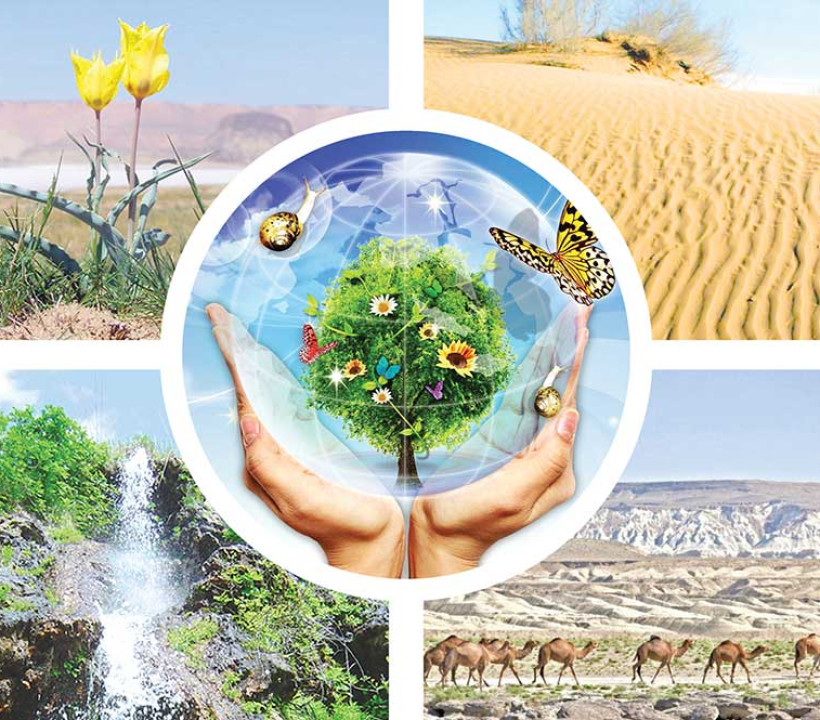
Biological Diversity of the Hazar State Nature Reserve
The biological diversity of the Caspian Sea as a whole consists of 1814 species of plants and animals. In the part of the sea belonging to us, there are over 900 species, which are represented by 50 taxonomic units, ranging from single-celled algae to higher plants, and from protozoa (foraminifera, flagellates) to birds and mammals. A significant part of these are endemic, making the Caspian Sea one of the most unique and incomparable water bodies on our planet. The biological diversity of the Hazar State Nature Reserve (HSNR) is distinguished by an abundance of species, as it includes not only marine areas but also certain freshwater bodies and significant areas of land that host rich groups of plants and terrestrial animals. The species composition of these groups is diverse, and many of them are important biological resources. The most numerous class of vertebrate animals in the reserve is birds, consisting of 311 species belonging to 19 orders. The coasts of the part of the sea belonging to us connect the Central Asian and East Asian migration routes, which are considered among the most important in the world. The area of the HSNR is of great importance for the survival of the only representative of the Pinnipedia order, the endemic Caspian seal (Phoca caspica). The biodiversity of the HSNR includes: 429 species of vertebrates, 48 species of fish, 2 species of amphibians, 26 species of reptiles, and 42 species of mammals. Many of them are included in the Red Book of Turkmenistan. The reserve contains 660 species of plants, including about 30 species of lower plants (fungi, mosses, lichens) and 528 species of flowering plants, which include 9 regional endemics and 5 species listed in the Red Book of Turkmenistan. The diversity of flora and fauna in the shallow coastal zone provides a rich food base with a biomass reaching hundreds of thousands of tons, attracting large numbers of migratory and wintering wetland and waterfowl to the Hazar Reserve. Today, in order to preserve the extremely rich biodiversity of the HSNR, it is necessary to create new forms of resource management aimed at providing alternative approaches to the use of natural wealth, either in cooperation with certain groups of the population or with their participation. Organized tours and treks in the habitats of rare and endemic animals can provide local communities with more income than using these animals for commercial purposes. The aesthetic value of many biodiversity objects (animals and plants) is much higher than their market price as food.
Muhadova Araztach
Maritime secondary vocational school of the city of Turkmenbashi, teacher