The historical roots of the carpet
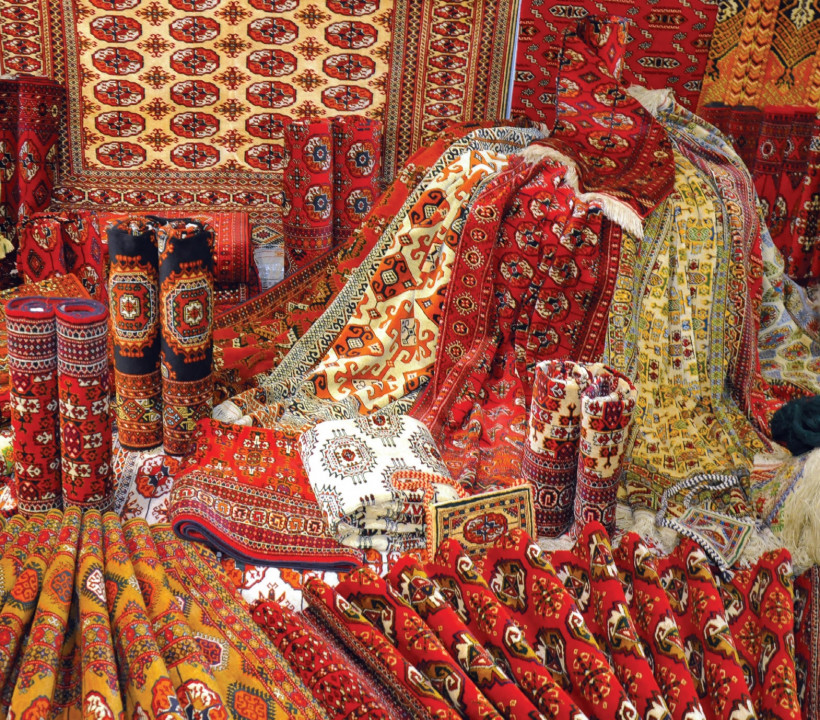
In the period of the Revival of New Era of the Powerful state great attention is paid to studying more deeply the Turkmen history and our national heritage. Studying the national history of Turkmen people, a way was opened deeply to know the material and spiritual values that created by them in the past as well as to apply them into life. Among the material values created by Turkmen people in the past, the importance of the craftsmanship used by Turkmen in the household was great. Carpet art is the richest and most developed form of other arts of Turkmen people. Hero Arkadag also describes about this art in his large-scale work.
Turkmen carpets are distinguished by their elegance, high quality, purity of colors and deep meanings of their patterns. Probably, Turkmen people travelled thousands of years to reach this level. A number of foreign scientists express their opinion about the antiquity of Turkmen carpets and their historical roots, while other scientists emphasize their beauty, fineness, elegance and another one emphasize the harmony of their patterns and brightness of colors.
At different times foreign traders and tourists who have set foot in the East have looked at the red Turkmen carpets that decorating the palaces of kings and rulers. Famous traveler Gulibef de Blokville witnessed the weaving of such magnificent carpets. He was impressed by that Turkmen women can make elegant arts who enjoy greater respect and freedom than other women of Muslim nations.
Textile production was carried out in all ancient and medieval cities of Turkmenistan, but high quality advanced production was concentrated in individual centers. Such centers were mainly located in Merv, Nisa, Sarahs, Abyvert, Koneurgench, Amul and Dehistan. However Turkmen textile industry gained great glory outside the territory of the country as far as the Magleb. Turkmen people have left their history roofs of culture and immortal art in works which will live for centuries – craftsmanship, ceramics products, jewelry products, made of stone, iron, silver, gold, silk and fabric products, inherited the first signs of the Turkmen writing. On excavations of Old Nisa was revealed samples of silk fabrics that were treated with gold threads and decorated with bronze adornments. In addition, wool and silk fabrics, Turkmenistan also produced cotton fabrics. Cotton as a spinning material has been known in Turkmenistan since ancient times. The Homeland of cotton is guessed to be Central Asia and South of Iran.
In addition, other types of fabrics were carried in large quantities from Merv to the near and Middle east countries. For example, once in Baghdad 27000 clothes were given and in some cases 1,187 people were given “muslim” and cotton cloth.
There are evidences of trade in Turkmen carpets in the 19th century. In 1821, English traveler Fraser who was Khorasan, wrote about the weaving of Turkmen carpets for sale; The industry of the Turkmen mainly consists of carpets, they weave those carpets from very beautiful products and those carpets are very valuable and bring a lot of income. In 1947 archeologists found the oldest carpet belonging to the Seythian tribes who are considered the ancient ancestors of the Turkmens in the cemetery on Pazryk Hill in the ancient Altai region, located in the territory of the present Mongolian State. It belongs to the V-IV centuries BC. Animals and plants are depicted on this carpet.
The carpet Pazryk is rectangulas, 1.60sm wide and 2m. The compositional structure of this carpet is very similar to modern carpets. Scholars claim that it also belongs to the period of Ancient Huns.
In general, carpet is the most valuable and perfect heritage of Turkmen culture. It has been passed down from generation to generation and survived its value to this day.
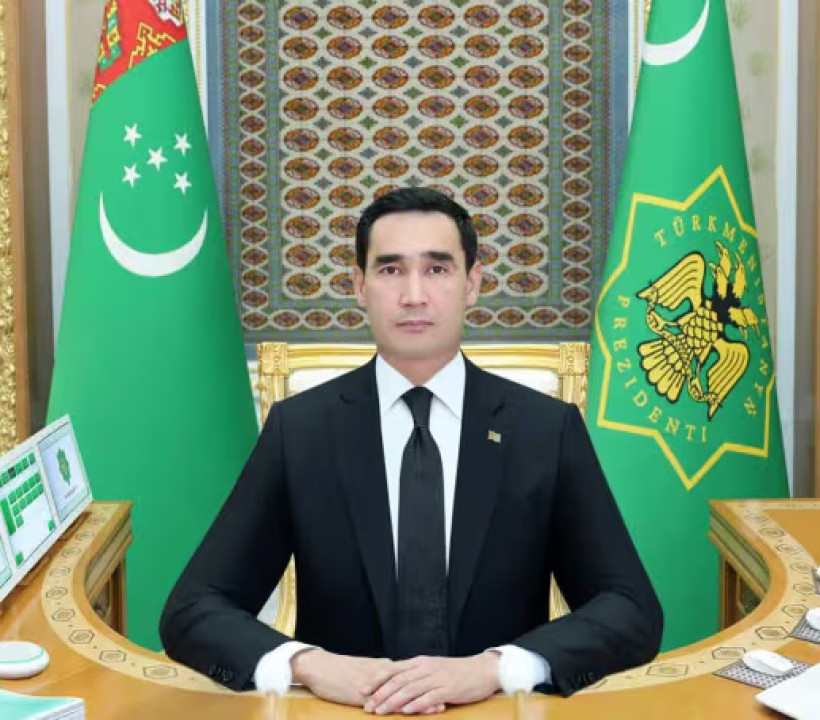
Under the leadership of President Serdar Berdimuhamedov paying great attention to our carpet-making women, proves that our carpet art will continue to grow and world famous carpets will be created.